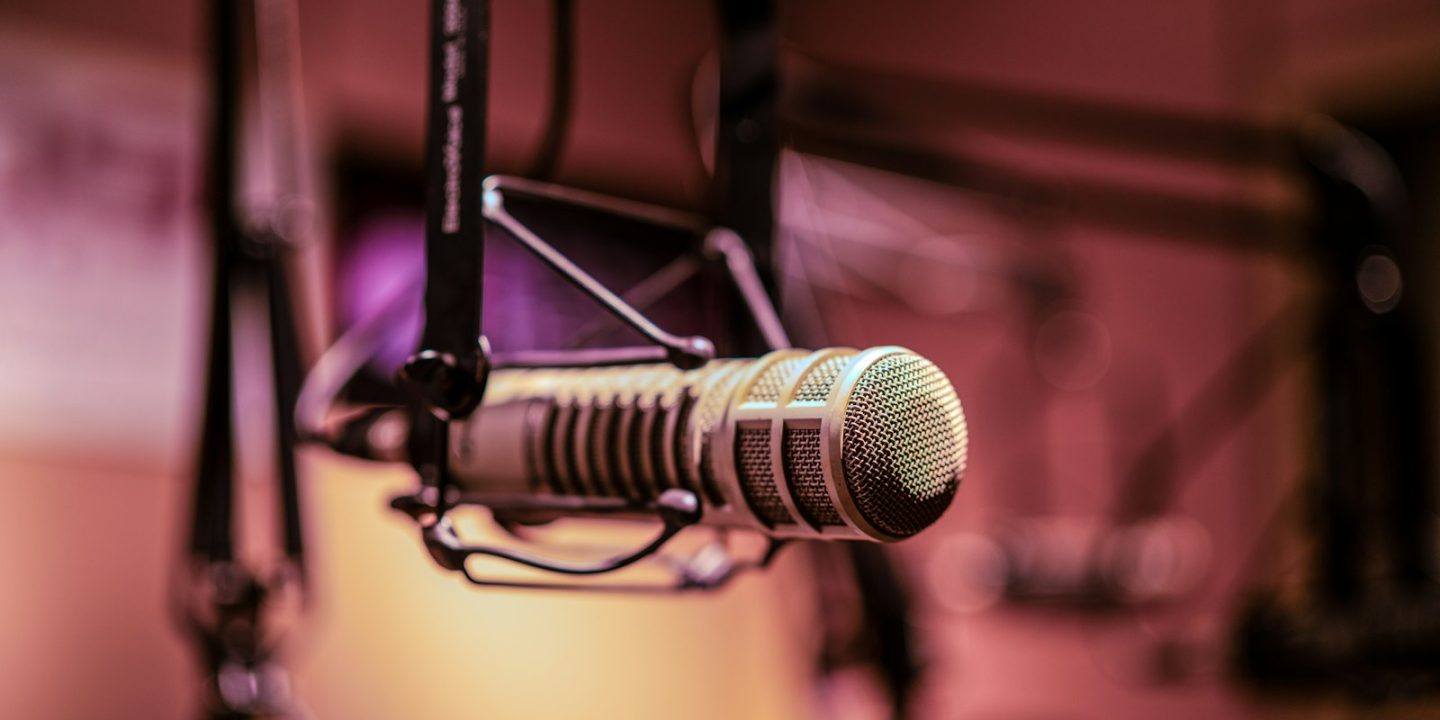
A good microphone is the single biggest upgrade for podcasts, streams, video calls and voice-overs. Your listeners will forgive a webcam that’s a bit soft, but they will click away from muffled, echoey or noisy audio within seconds. The good news: in 2026 you don’t need a mixing desk or an audio interface to sound professional. A modern USB microphone plugs straight into your laptop and many now include smart processing that levels your voice and removes background noise automatically.
We’ve gathered the USB mics that expert reviewers — MusicRadar’s dedicated audio team in particular — rate most highly, from budget picks around the €100 mark to hybrid USB/XLR mics that grow with you. UK prices are listed where EU prices weren’t available at the time of writing; microphone prices change often, so always check the current offer.
Our picks at a glance
- Best overallShure MV7+
- Best for podcastsRode PodMic USB
- Best condenserRode NT-USB+
- Easiest to useShure MV6
- Best budgetSennheiser Profile
- Best for noisy roomsAudio-Technica AT2040USB
- Best for streamingHyperX QuadCast 2 S
Prices are approximate and change often. Ad
1. Shure MV7+ — best overall
MusicRadar names the MV7+ both its best USB microphone and its best podcasting microphone, and it’s easy to see why. It’s a dynamic, broadcast-style mic, which means it focuses on the voice directly in front of it and ignores much of the room around it — ideal if you record in a normal bedroom or office rather than a treated studio.
The clever part is the dual output. Today you can plug it into your computer over USB-C; later, if you buy an audio interface or a podcast mixer, you can use the XLR output instead — you can even use both at once for a backup recording. Shure’s processing includes a real-time denoiser, a digital pop filter and Auto Level, which adjusts your gain as you move. The only real downside is price, and some reviewers feel the processing is a little prescriptive.
Shure MV7+
MusicRadar's top USB mic and top podcast mic: a dynamic broadcast-style mic with both USB-C and XLR outputs and smart, zero-latency processing.
- Type
- Dynamic, cardioid
- Outputs
- USB-C + XLR (usable together)
- Resolution
- 24-bit / 48 kHz
- Extras
- Denoiser, digital pop filter, Auto Level, touch mute
Pros
- Clear, full voice sound
- USB now, XLR later when you upgrade
- Auto Level and denoiser do the hard work
Cons
- Costs more than budget USB mics
- DSP can feel a little prescriptive
2. Rode PodMic USB — best for podcasts
Rode’s PodMic USB is built like a tank, with an internal pop filter and shock mount that keep plosives and desk bumps out of your recording. Like the Shure, it offers both USB-C and XLR outputs, and its Aphex-powered processing (compressor, EQ, noise gate) is stored on the mic itself, so your sound stays consistent from computer to computer.
MusicRadar praises its flat response, though it notes the mic is slightly mid-forward. It’s heavy, so budget for a sturdy boom arm — cheap desk stands will struggle. Note too that the onboard processing only works over USB, not XLR.
Rode PodMic USB
A rugged broadcast dynamic mic with USB-C and XLR, internal pop filter and onboard Aphex DSP — MusicRadar's best podcast USB mic.
- Type
- Dynamic, cardioid
- Outputs
- USB-C + XLR
- Extras
- Internal pop filter + shock mount, Aphex DSP, headphone out
- Max SPL
- 148 dB
Pros
- Very durable build
- Flat, natural speech tone
- DSP settings are saved on the mic
Cons
- Heavy — needs a sturdy boom arm
- DSP not available over XLR
- Swing mount is fiddly
3. Rode NT-USB+ — best condenser
If you record voice-overs, audiobooks or singing in a fairly quiet room, a condenser mic captures more detail and air than a dynamic. The NT-USB+ is a reviewer favourite thanks to its clean sound, solid construction and a built-in headphone amplifier for zero-latency monitoring. The same Aphex processing as the PodMic is available through Rode’s app.
The trade-off with any condenser is that it hears more of your room, including keyboard clicks and echo. There’s also no physical gain knob — you set levels in software.
Rode NT-USB+
A clean, detailed studio condenser on USB-C with built-in Aphex processing and a proper headphone amp — great for voice-overs, vlogging and vocals.
- Type
- Condenser, cardioid
- Output
- USB-C
- Resolution
- 24-bit / 48 kHz
- Extras
- Aphex DSP, headphone amp, pop filter included
Pros
- Detailed, studio-style sound
- Solid build
- Zero-latency headphone monitoring
Cons
- No physical gain knob
- Condenser picks up more room noise than a dynamic
4. Shure MV6 — easiest to use
The MV6 is the MV7+’s smaller, simpler sibling. It’s USB-C only, but it keeps the features that matter for beginners: Auto Level mode, real-time denoising, a digital pop filter and tap-to-mute. MusicRadar highlights how quick it is to set up — useful if you just want your Teams calls and Discord chats to sound better without learning audio engineering.
Shure MV6
A compact USB-C dynamic mic built around simplicity: plug it in, enable Auto Level and tap the top to mute.
- Type
- Dynamic, cardioid
- Output
- USB-C
- Extras
- Auto Level, real-time denoiser, digital pop filter, tap-to-mute
- Stand
- Desk stand included
Pros
- Very easy setup
- Dynamic capsule rejects room noise
- Handy tap-to-mute
Cons
- USB only — no XLR
- App could be easier to use
5. Sennheiser Profile — best budget
Sennheiser’s Profile is MusicRadar’s best-budget USB mic. It’s a condenser with genuinely useful physical controls — gain, a mix knob for blending your voice with computer audio, headphone volume and mute — plus a visual level indicator so you know you’re not clipping. The catch is sensitivity: louder voices can overload it, and like any condenser it will hear your mechanical keyboard.
Sennheiser Profile
MusicRadar's best-budget USB mic: a clear, present condenser with tactile gain, mix and mute controls on the body.
- Type
- Condenser, cardioid
- Output
- USB-C
- Controls
- Gain, mix, headphone volume, mute
- Stand
- Table stand included
Pros
- Clear, present voice sound
- Physical controls and level meter
- Good value
Cons
- Very sensitive — loud voices can overload it
- Picks up keyboard and room noise
6. Audio-Technica AT2040USB — best for noisy rooms
The AT2040USB uses a hypercardioid dynamic capsule, which has an even tighter pickup than a standard cardioid. In practice, that means less of your room, your PC fans and your street noise. A switchable low-cut filter around 80 Hz tames rumble, and recording resolution goes up to 24-bit/96 kHz. It’s heavy for its size and is very much a speech mic rather than a music all-rounder.
Audio-Technica AT2040USB
A hypercardioid dynamic USB mic with a low-cut filter — the tight pickup keeps keyboard clatter and room echo out of your recordings.
- Type
- Dynamic, hypercardioid
- Output
- USB-C
- Resolution
- Up to 24-bit / 96 kHz
- Extras
- 80 Hz low-cut, mute button, headphone out
Pros
- Tight pickup rejects background noise
- Low-cut filter tames rumble
- Good value
Cons
- Heavy for cheap stands
- Less versatile for music and singing
7. HyperX QuadCast 2 S — best for streaming
A long-time streamer favourite, the QuadCast 2 S offers four pickup patterns (cardioid, omni, figure-8 and stereo), so one mic can handle solo streams, two-person interviews facing each other, and room recordings. It records at up to 32-bit/192 kHz, includes a shock mount and desk stand, and has tap-to-mute. The RGB lighting is either a feature or a turn-off, depending on your taste.
HyperX QuadCast 2 S
A streamer favourite: a condenser USB mic with four pickup patterns, tap-to-mute and customisable RGB lighting.
- Type
- Condenser
- Patterns
- Cardioid, omni, figure-8, stereo
- Resolution
- Up to 32-bit / 192 kHz
- Extras
- Shock mount, desk stand, tap-to-mute, RGB
Pros
- Four polar patterns
- Easy controls
- Shock mount included
Cons
- RGB look won't suit everyone
- Condenser hears more of your room than a dynamic
Compare the key specs
| Model | Shure MV7+Best overall | Rode PodMic USBBest for podcasts | Rode NT-USB+Best condenser | Shure MV6Easiest to use | Sennheiser ProfileBest budget | Audio-Technica AT2040USBBest for noisy rooms | HyperX QuadCast 2 SBest for streaming |
|---|---|---|---|---|---|---|---|
| TechHive score | 9.1/10 | 8.9/10 | 8.6/10 | 8.4/10 | 8.3/10 | 8.2/10 | 8.2/10 |
| Approx. price | Varies | Varies | Varies | Varies | Varies | Varies | Varies |
| Type | Dynamic, cardioid | Dynamic, cardioid | Condenser, cardioid | Dynamic, cardioid | Condenser, cardioid | Dynamic, hypercardioid | Condenser |
| Outputs | USB-C + XLR (usable together) | USB-C + XLR | — | — | — | — | — |
| Resolution | 24-bit / 48 kHz | — | 24-bit / 48 kHz | — | — | Up to 24-bit / 96 kHz | Up to 32-bit / 192 kHz |
| Extras | Denoiser, digital pop filter, Auto Level, touch mute | Internal pop filter + shock mount, Aphex DSP, headphone out | Aphex DSP, headphone amp, pop filter included | Auto Level, real-time denoiser, digital pop filter, tap-to-mute | — | 80 Hz low-cut, mute button, headphone out | Shock mount, desk stand, tap-to-mute, RGB |
| Max SPL | — | 148 dB | — | — | — | — | — |
| Output | — | — | USB-C | USB-C | USB-C | USB-C | — |
| Stand | — | — | — | Desk stand included | Table stand included | — | — |
| Controls | — | — | — | — | Gain, mix, headphone volume, mute | — | — |
| Patterns | — | — | — | — | — | — | Cardioid, omni, figure-8, stereo |
| Shop Ad | Amazon | Amazon | Amazon | Amazon | Amazon | Amazon | Amazon |
How to choose a USB microphone
Dynamic or condenser?
This is the most important decision. Dynamic mics (Shure MV7+, MV6, Rode PodMic USB, AT2040USB) are less sensitive and focus on a voice close to the capsule, so they suit untreated rooms, gaming setups and anyone with a noisy keyboard. Condenser mics (Rode NT-USB+, Sennheiser Profile, QuadCast 2 S) capture more detail and work at a greater distance, but they hear the room too. If your room echoes, choose a dynamic.
USB only, or USB + XLR?
USB-only mics are simplest. Hybrid USB/XLR models cost more but let you move to an audio interface later without buying a new mic. If you’re serious about podcasting, that flexibility is worth it — see our guide to the best audio interfaces.
Processing and software
Auto-level, denoising and compression used to need plugins and know-how. Shure and Rode now do it on the mic or in a free app. Check that the software runs on your computer and that settings can be saved to the mic if you switch between machines.
Don’t forget the accessories
A boom arm puts the mic close to your mouth and away from desk vibrations — the single best way to improve any mic’s sound. A pair of closed-back headphones lets you hear what you’re recording; our studio headphones guide has options from around €100.
Buying in Europe
All mics here are USB-C, bus-powered and work without drivers on Windows and macOS. EU consumers get a minimum two-year legal guarantee from the seller. Prices across Amazon’s European stores can differ by €20–40, so it’s worth comparing.
How we choose
We don’t run our own microphone lab yet. Instead, we compare the recommendations and test notes of established reviewers — MusicRadar’s USB microphone and podcasting-microphone guides were the main sources for this article — and focus on models that are widely available in Europe. We always list weaknesses as well as strengths. Read more about how we research.
FAQ
Do I need an audio interface for a USB microphone?
No. A USB mic has its own built-in converter and connects directly to your computer, tablet or many phones. You only need an interface for XLR microphones.
What’s the best microphone for a noisy room?
A dynamic mic used close to your mouth: the Shure MV7+, Shure MV6, Rode PodMic USB or the hypercardioid Audio-Technica AT2040USB.
Are USB mics good enough for professional podcasts?
Yes. Hybrid models like the Shure MV7+ and Rode PodMic USB are used by many professional podcasters, and you can switch to their XLR outputs as your setup grows.
Can I use a USB mic for singing?
You can — a condenser such as the Rode NT-USB+ suits vocals best — but for recording music with instruments, an XLR mic and an audio interface offer more flexibility.