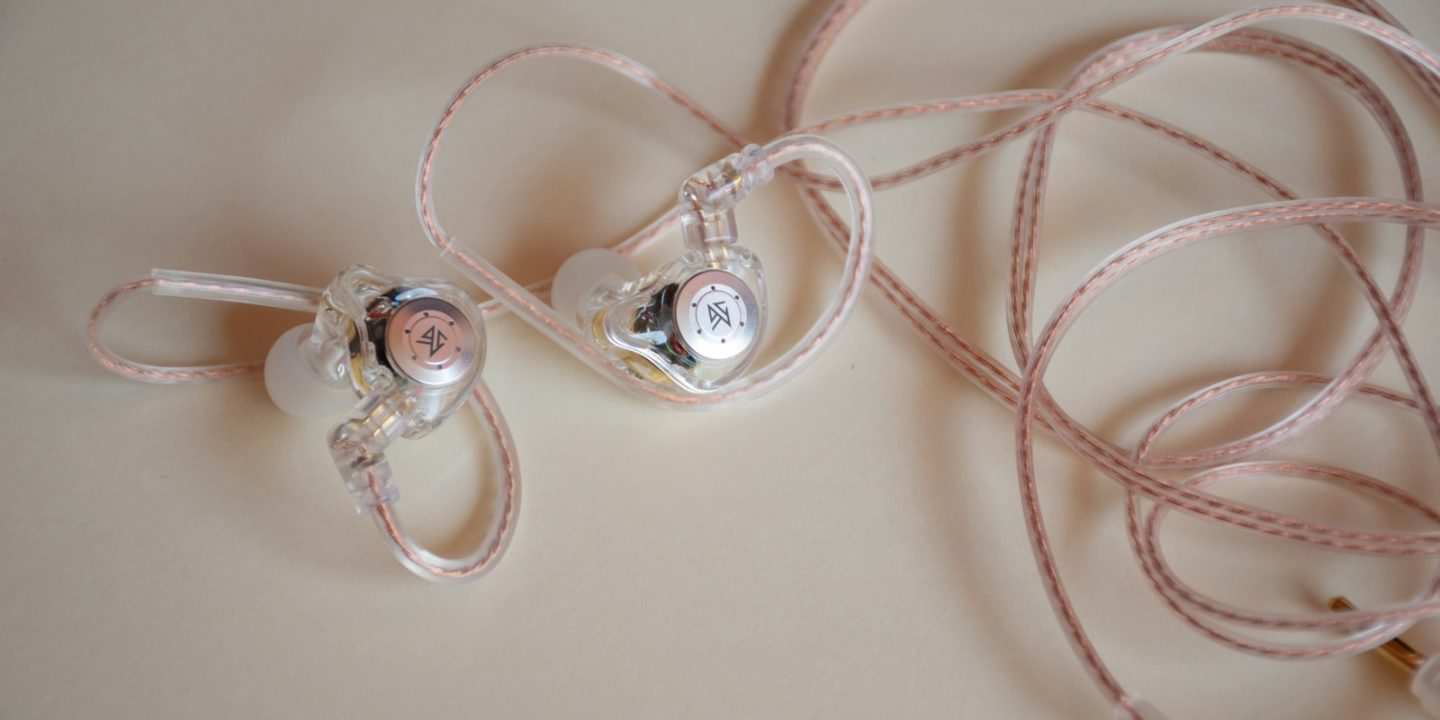
In-ear monitors (IEMs) have replaced floor wedges for many bands. They protect your hearing by blocking stage noise, let you hear a clean personal mix at lower volume, and make every venue sound more consistent. They’re also excellent for drummers playing to a click, for practice at home and for detailed listening in the studio.
This guide covers wired IEMs you plug into a wireless in-ear system, a headphone amp or your mixer. Our picks are based mainly on MusicRadar’s 2026 in-ear monitor guide, with euro prices from the French retailer Woodbrass in October 2026. We start with affordable models and work up to professional flagships.
Our picks at a glance
- Best valueSennheiser IE 100 Pro
- Best budget classicShure SE215 Pro
- Best dual driverMackie MP-220
- Best mid-rangeAudio-Technica ATH-E70
- Best for mixingBeyerdynamic DT 70 IE
- Best overall (premium)Shure SE846 Pro (Gen 2)
Prices are approximate and change often. Ad
1. Sennheiser IE 100 Pro — best value
MusicRadar names the IE 100 Pro its best IEM for comfort, and at around €89 it’s the obvious first pair. It’s light, sits comfortably for long sets, and has a fairly flat, non-fatiguing sound that makes it easy to hear your own part clearly. The cable is detachable, so a damaged lead isn’t the end of the IEM.
The bass could go a little lower, and drummers may find the standard cable short. For singers, guitarists and keyboard players, it’s hard to beat for the money.
Sennheiser IE 100 Pro
MusicRadar's comfort pick: a light single-driver IEM with a fairly flat, non-fatiguing sound and a detachable cable.
- Drivers
- 1 dynamic
- Impedance
- 20 Ω
- Sensitivity
- 115 dB
- Frequency range
- 20 Hz – 18 kHz
Pros
- Very comfortable and light
- Fairly neutral, non-fatiguing
- Great price
Cons
- Bass could go deeper
- Cable may be short for drummers
2. Shure SE215 Pro — best budget classic
The SE215 has been on stages for years and remains MusicRadar’s best budget pick. Its single dynamic driver gives a warm sound with decent bass, the sound-isolating sleeves block a lot of stage noise, and the cable is replaceable.
Tonal range is limited compared with multi-driver models, but at around €114 it’s a dependable workhorse — and replacement tips and cables are easy to find anywhere in Europe.
Shure SE215 Pro
The long-running stage favourite: one driver, good isolation, decent bass and a replaceable cable — MusicRadar's best budget pick.
- Drivers
- 1 dynamic
- Impedance
- 20 Ω
- Sensitivity
- 107 dB
- Frequency range
- 22 Hz – 17.5 kHz
Pros
- Great value
- Detachable cable
- Good isolation and bass
Cons
- Limited tonal range
- Single driver
3. Mackie MP-220 — best dual driver
With two drivers, the MP-220 separates bass and treble more clearly than single-driver budget IEMs. MusicRadar praised its separation, sturdy build and value. It can sound bass-heavy and some testers found it snug in smaller ears, but at around €149 it’s a sensible step up for bassists and drummers who want more low end.
Mackie MP-220
A sturdy dual-driver IEM with clear separation for the money — MusicRadar's best dual-driver pick.
- Drivers
- 2 dynamic
- Impedance
- 8 Ω
- Sensitivity
- 104 dB
- Frequency range
- 20 Hz – 20 kHz
Pros
- Good driver separation
- Sturdy build
- Strong value
Cons
- Can be bass-heavy
- Snug for smaller ears
4. Audio-Technica ATH-E70 — best mid-range
The three-driver ATH-E70 is MusicRadar’s mid-range winner, described as punching above its weight. Memory-wire loops keep the cable secure over your ears while you move, and the detail makes it easier to pick out individual instruments in a busy monitor mix.
Bass response depends a lot on getting a good seal with the tips, and it’s a little bassier than some players prefer. At around €354 it’s a big but worthwhile upgrade for regularly gigging musicians.
Audio-Technica ATH-E70
A three-driver IEM that MusicRadar says punches above its weight, with memory-wire cable loops that stay put on stage.
- Drivers
- 3 balanced armature
- Impedance
- 39 Ω
- Sensitivity
- 109 dB
- Frequency range
- 20 Hz – 19 kHz
Pros
- Detailed, multi-driver sound
- Secure memory-wire fit
- Comfortable
Cons
- Bass varies with tip fit
- Bassier than some prefer
5. Beyerdynamic DT 70 IE — best for mixing
Beyerdynamic’s DT 70 IE has a very wide frequency range and up to 39 dB of passive isolation, which MusicRadar highlights for mixing and critical listening. It’s comfortable and well made.
Reviewers note it’s a single-driver design at a high price (around €498), and that better multi-driver IEMs exist for similar money. Consider it if isolation and a neutral reference sound matter most.
Beyerdynamic DT 70 IE
A single-driver IEM with a very wide frequency range and strong 39 dB passive isolation, which MusicRadar picks for mixing.
- Drivers
- 1 dynamic
- Impedance
- 16 Ω
- Sensitivity
- 113 dB
- Isolation
- Up to 39 dB passive
Pros
- Wide frequency range
- Excellent isolation
- Comfortable
Cons
- Single driver at a high price
- Better multi-driver IEMs exist
6. Shure SE846 Pro (Gen 2) — best overall
MusicRadar’s best overall IEM is Shure’s flagship. Multiple balanced-armature drivers deliver precise, high-resolution sound with excellent separation, and the nozzles are comfortable for long shows. It’s built for professional touring and studio work.
At around €1,045 it’s a serious investment, and Bluetooth needs an extra adapter. If you’re not yet sure IEMs are for you, start with the IE 100 Pro and upgrade later.
Shure SE846 Pro (Gen 2)
MusicRadar's best overall IEM: precise, high-resolution sound and comfortable nozzles for professional stage and studio use.
- Drivers
- Multi balanced armature
- Impedance
- 16 Ω
- Sensitivity
- 110 dB
- Frequency range
- 15 Hz – 20 kHz
Pros
- Excellent, precise sound
- Comfortable fit
- Professional build
Cons
- Very expensive
- Bluetooth adapter costs extra
Compare the key specs
| Model | Sennheiser IE 100 ProBest value | Shure SE215 ProBest budget classic | Mackie MP-220Best dual driver | Audio-Technica ATH-E70Best mid-range | Beyerdynamic DT 70 IEBest for mixing | Shure SE846 Pro (Gen 2)Best overall (premium) |
|---|---|---|---|---|---|---|
| TechHive score | 8.6/10 | 8.3/10 | 8.0/10 | 8.4/10 | 8.2/10 | 9.0/10 |
| Approx. price | €89 | €114 | €149 | €354 | €498 | €1,045 |
| Drivers | 1 dynamic | 1 dynamic | 2 dynamic | 3 balanced armature | 1 dynamic | Multi balanced armature |
| Impedance | 20 Ω | 20 Ω | 8 Ω | 39 Ω | 16 Ω | 16 Ω |
| Sensitivity | 115 dB | 107 dB | 104 dB | 109 dB | 113 dB | 110 dB |
| Frequency range | 20 Hz – 18 kHz | 22 Hz – 17.5 kHz | 20 Hz – 20 kHz | 20 Hz – 19 kHz | — | 15 Hz – 20 kHz |
| Isolation | — | — | — | — | Up to 39 dB passive | — |
| Shop Ad | Amazon | Amazon | Amazon | Amazon | Amazon | Amazon |
How to choose in-ear monitors
Universal fit vs custom moulds
Every IEM here is universal-fit, using silicone or foam tips. They’re cheaper and can be resold. Custom-moulded IEMs, made from ear impressions taken by an audiologist, isolate and fit better but cost much more and take weeks to make. Start universal; go custom once you gig regularly.
Fit and isolation matter most
An IEM only sounds right — and only protects your hearing — when it seals properly. Try all the included tips, and consider foam tips for better isolation and bass. A good seal lets you keep the monitor volume lower.
Drivers: more isn’t always better
Multi-driver IEMs split the frequency range between drivers for more detail, but a good single-driver model like the IE 100 Pro can sound more natural than a poorly tuned multi-driver one. Bassists and drummers benefit most from extra low-end drivers.
You’ll need a way to feed them
Wired IEMs need a signal: a wireless in-ear transmitter and belt pack, a personal monitor mixer, or a headphone amp connected to your mixer or audio interface. For home practice, plug them straight into your interface or digital piano.
Protect your hearing
IEMs reduce stage noise, but turning them up too loud defeats the point. Keep volumes moderate, take breaks and consider a limiter on your monitor feed.
Buying in Europe
For hygiene reasons, some retailers won’t accept returns of opened in-ear products, so check the policy before ordering. EU buyers still get the two-year legal guarantee for faults.
How we choose
We haven’t worn every IEM here on stage. Our picks are based on MusicRadar’s 2026 in-ear monitor guide and specifications, combined with current European prices, and we list each model’s weaknesses. Read more about how we research.
FAQ
Can I use earbuds as in-ear monitors?
Regular earbuds rarely isolate well enough for stage use, and Bluetooth adds latency. For listening rather than performing, see our best wireless earbuds.
Are IEMs good for drummers?
Yes — they block a lot of the kit’s volume and let you hear a click clearly. Look for strong isolation and a longer cable.
Do I need a wireless system?
Only if you move around on stage. Seated players such as drummers and keyboardists can use a wired headphone feed.
Single or multi-driver for a first pair?
A single-driver IEM like the Sennheiser IE 100 Pro or Shure SE215 is the best place to start. Upgrade once you know what you want more of.