The graphics card market in 2026 is unusual. No new GPU generation is coming soon: reports in February said Nvidia had no plans to launch a new GPU this year, so there is no RTX 50 Super and the RTX 60 series is reportedly delayed. Meanwhile a global memory-chip shortage has pushed prices up, especially for cards with 16 GB or more. In the US the RTX 5070 Ti reached around $1,000, and AMD’s value-focused RX 9070 XT also rose sharply.
That means the cards on sale now, Nvidia’s RTX 50 series, AMD’s RX 9000 series and Intel’s Arc B-series, are the ones to buy, and choosing the right tier matters more than ever. This guide covers the best GPUs for 1440p and 4K gaming, with European prices. Treat every price as a snapshot and check current offers, because they move weekly.
Our picks at a glance
- Best overallAMD Radeon RX 9070 XT
- Best for 4K valueNvidia GeForce RTX 5070 Ti
- Best 1440p valueAMD Radeon RX 9070
- Best Nvidia for 1440pNvidia GeForce RTX 5070
- Best consumer 4KNvidia GeForce RTX 5080
- Best budgetIntel Arc B580
- Enthusiast pickNvidia GeForce RTX 5090
Prices are approximate and change often. Ad
1. AMD Radeon RX 9070 XT: the best graphics card for most gamers
TechRadar names the RX 9070 XT the best graphics card overall, and the value case is strong. It performs close to an RTX 4080 in games, has 16 GB of VRAM and supports DisplayPort 2.1. European prices were around €640–700 in March 2026, with an Asus Prime OC listed at €639 at Alternate. That is far below what Nvidia charges for similar raster performance.
It handles high-refresh 1440p with ease and can manage entry-level 4K. Where Nvidia still leads is heavy ray tracing and creative and AI workloads that rely on CUDA. If you mainly play games, this is the card to buy.
AMD Radeon RX 9070 XT
TechRadar's best overall graphics card: performance close to an RTX 4080 with 16 GB of VRAM, for far less money.
- VRAM
- 16 GB GDDR6
- Power
- 304 W
- Outputs
- DisplayPort 2.1
- Target
- 1440p high refresh / entry 4K
Pros
- Excellent price-to-performance
- 16 GB VRAM for longevity
- Performance close to an RTX 4080
Cons
- Ray tracing trails Nvidia
- Weaker for creative/AI workloads than Nvidia
2. Nvidia GeForce RTX 5070 Ti: the best Nvidia card for 1440p and 4K
The RTX 5070 Ti delivers RTX 4080 Super-level performance with 16 GB of fast GDDR7. It also supports DLSS 4 Multi Frame Generation, which can multiply frame rates in supported games. For anyone who wants Nvidia’s ray-tracing strength and software ecosystem, it is the sweet spot of the range.
Supply has been tight and prices have climbed. A Gigabyte Windforce SFF model was around €925 in March 2026. Compare carefully with the RX 9070 XT: if ray tracing and DLSS matter to you, the extra money is justified.
Nvidia GeForce RTX 5070 Ti
RTX 4080 Super-class performance with 16 GB GDDR7 and Multi Frame Generation — the sweet spot for 4K on Nvidia.
- VRAM
- 16 GB GDDR7
- Power
- 300 W
- Frame gen
- DLSS 4 Multi Frame Generation
- Target
- 1440p / 4K
Pros
- RTX 4080 Super-level performance
- 16 GB VRAM
- Multi Frame Generation
Cons
- Supply has been constrained
- Prices rose sharply in 2026
3. AMD Radeon RX 9070: the best value for 1440p
The non-XT RX 9070 is the smart 1440p choice. According to PCGH it matches the RTX 5070 in ray tracing and beats it in raster performance. Its 16 GB of VRAM should also age better than the 5070’s 12 GB as games get more demanding. It sold for around €600 in January 2026.
The catch is that the XT version often costs only a little more. If the gap is under about €60, stretch to the XT.
AMD Radeon RX 9070
Per PCGH, it matches the RTX 5070 in ray tracing and beats it in raster — and its 16 GB should age better than the 5070's 12 GB.
- VRAM
- 16 GB GDDR6
- Target
- 1440p
- Rival
- Nvidia RTX 5070
Pros
- Beats the RTX 5070 in raster (PCGH)
- 16 GB VRAM
- Ray tracing on par with RTX 5070
Cons
- The XT often costs only a little more
- No DLSS — relies on AMD's upscaling
4. Nvidia GeForce RTX 5070: the cheapest current-gen Nvidia for 1440p
The RTX 5070 brings DLSS 4 and Nvidia’s feature set, including Reflex and NVENC for streaming, to the €600–650 bracket. Asus Dual and Palit models were seen at €598 and €649 in early 2026. It is a capable 1440p card.
Its 12 GB of VRAM is the limiting factor, especially at 4K or with high-resolution texture packs. Unless you specifically need Nvidia features, the RX 9070 is the better buy at a similar price.
Nvidia GeForce RTX 5070
Nvidia's mainstream 1440p card, with DLSS 4 support — good if you want Nvidia's feature set at the lowest current-gen price.
- VRAM
- 12 GB GDDR7
- Upscaling
- DLSS 4
- Target
- 1440p
Pros
- DLSS 4 and Nvidia's feature set
- Good 1440p performance
Cons
- 12 GB VRAM is limiting at 4K
- Slower than RX 9070 in raster
5. Nvidia GeForce RTX 5080: the best consumer 4K card
For high-refresh 4K, the RTX 5080 is the fastest card that still makes some financial sense. It has 16 GB of GDDR7, a 360 W draw and full DLSS 4 support. Its gain over the previous generation is modest, and we could not verify a reliable European price. US street prices were around $1,400 in February, so check current offers carefully.
Nvidia GeForce RTX 5080
The fastest card most gamers should consider for high-refresh 4K, with DLSS 4 doing the heavy lifting in demanding titles.
- VRAM
- 16 GB GDDR7
- Power
- 360 W
- Upscaling
- DLSS 4
- Target
- 4K
Pros
- Strong 4K performance
- Full DLSS 4 feature set
Cons
- Modest gain over the previous generation
- Expensive
6. Intel Arc B580: the best budget graphics card
Intel’s Arc B580 offers strong 1440p performance for the money and 12 GB of VRAM, more than many pricier cards had a generation ago. Its MSRP was under $250. European prices vary by retailer and stock, but it is the budget card to beat. Ray tracing trails Nvidia. For pure 1080p, the cheaper Arc B570 with 10 GB is an option.
Intel Arc B580
Strong 1440p performance for the money with 12 GB of VRAM — the budget card to beat.
- VRAM
- 12 GB
- Target
- Budget 1440p
- Little brother
- Arc B570 (10 GB) for 1080p
Pros
- Great 1440p performance per euro
- 12 GB VRAM at a budget price
Cons
- Ray tracing trails Nvidia
- EU availability and pricing vary
7. Nvidia GeForce RTX 5090: the enthusiast flagship
The RTX 5090 is the fastest consumer GPU available, with a huge 32 GB of GDDR7 that makes it attractive for AI and creative work as well as 4K gaming. It draws up to 575 W, and Nvidia recommends a 950 W power supply. With US street prices around $3,500 in February, it is overkill for nearly every gamer, but there is nothing faster.
Nvidia GeForce RTX 5090
The no-compromise flagship for 4K and creator workloads, with a massive 32 GB of VRAM — overkill for most players.
- VRAM
- 32 GB GDDR7
- Power
- 575 W
- PSU
- 950 W recommended
- Target
- 4K / creators
Pros
- Fastest consumer GPU available
- 32 GB VRAM for AI and creative work
Cons
- Very expensive
- 575 W draw — needs a big PSU and case
Compare the key cards
| Model | AMD Radeon RX 9070 XTBest overall | Nvidia GeForce RTX 5070 TiBest for 4K value | AMD Radeon RX 9070Best 1440p value | Nvidia GeForce RTX 5070Best Nvidia for 1440p |
|---|---|---|---|---|
| TechHive score | 9.0/10 | 8.9/10 | 8.6/10 | 8.3/10 |
| Approx. price | €640 | €925 | €600 | €600 |
| VRAM | 16 GB GDDR6 | 16 GB GDDR7 | 16 GB GDDR6 | 12 GB GDDR7 |
| Power | 304 W | 300 W | — | — |
| Outputs | DisplayPort 2.1 | — | — | — |
| Target | 1440p high refresh / entry 4K | 1440p / 4K | 1440p | 1440p |
| Frame gen | — | DLSS 4 Multi Frame Generation | — | — |
| Rival | — | — | Nvidia RTX 5070 | — |
| Upscaling | — | — | — | DLSS 4 |
| Shop Ad | Amazon | Amazon | Amazon | Amazon |
How to choose a graphics card in 2026
Match the GPU to your monitor
For 1440p at high refresh rates, an RX 9070, RX 9070 XT or RTX 5070 is plenty. For 4K, aim for at least an RX 9070 XT or RTX 5070 Ti, and use upscaling (DLSS or FSR) in the most demanding games. If you’re also shopping for a screen, see our best gaming monitors.
VRAM matters more than it used to
Modern games with high-resolution textures can exceed 12 GB at 4K. A 16 GB card is the safer long-term bet, especially now that no new generation is due soon and you’ll likely keep this card for years.
AMD or Nvidia?
AMD generally gives more raster performance and VRAM per euro. Nvidia leads in ray tracing, has the more mature upscaling and frame generation (DLSS 4), and dominates in CUDA-based creative and AI software. Decide based on the games and apps you actually use.
Power supply and case
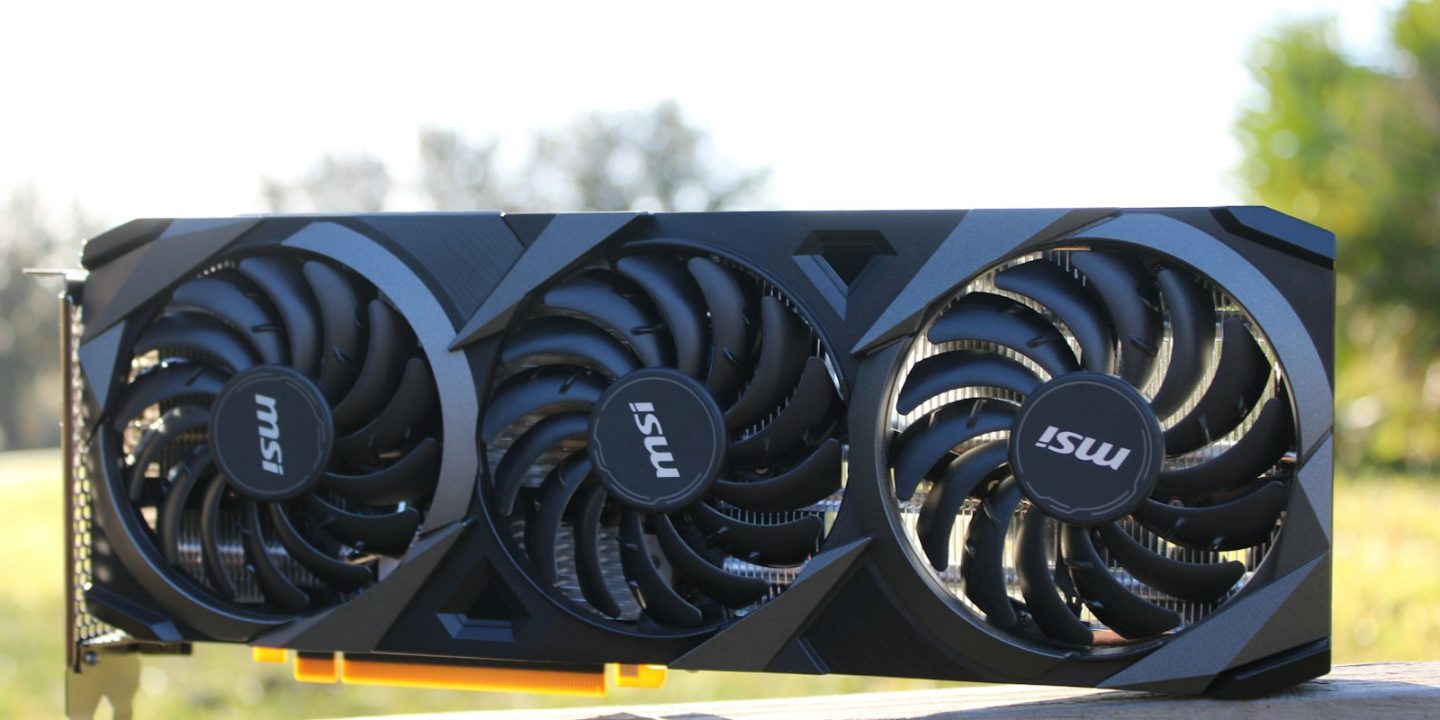
Check your PSU wattage and connectors before buying. The RX 9070 XT draws around 304 W, the RTX 5070 Ti around 300 W and the RTX 5090 up to 575 W. Large triple-fan cards also need case clearance, so measure.
Buying in Europe
Prices vary a lot between retailers and countries, and even between board-partner models of the same GPU. Use a price-comparison site, and remember that EU purchases include at least a two-year legal guarantee plus, for online orders, a 14-day withdrawal right. Given the memory-driven price rises, a good deal on a card you need now beats waiting for a generation that isn’t coming this year.
This guide focuses on graphics cards. CPU, RAM and power supply recommendations will follow in separate guides.
How we choose
We don’t benchmark cards ourselves. Our picks combine the performance testing of outlets such as TechRadar, PC Games Hardware (PCGH) and Notebookcheck with European street prices from retailers and comparison sites. Prices in this guide date from January to March 2026 unless stated otherwise. GPU prices have been very volatile in 2026, so always check the current price before buying.
FAQ
Is it a good time to buy a GPU?
Prices are higher than in 2025 because of the memory shortage, but no new generation is expected this year. If you need an upgrade, buying a current card at a fair price is reasonable. Waiting may not bring savings.
Is 12 GB VRAM enough?
For 1440p today, generally yes. For 4K and future titles, 16 GB is the safer choice.
What’s the best GPU for 4K gaming?
The RTX 5080 is the best realistic 4K card. The RTX 5070 Ti and RX 9070 XT handle 4K well with upscaling for much less money.
What’s the best budget GPU?
The Intel Arc B580 offers the best 1440p performance per euro at the low end. If your budget stretches to around €600, the RX 9070 is a major step up.