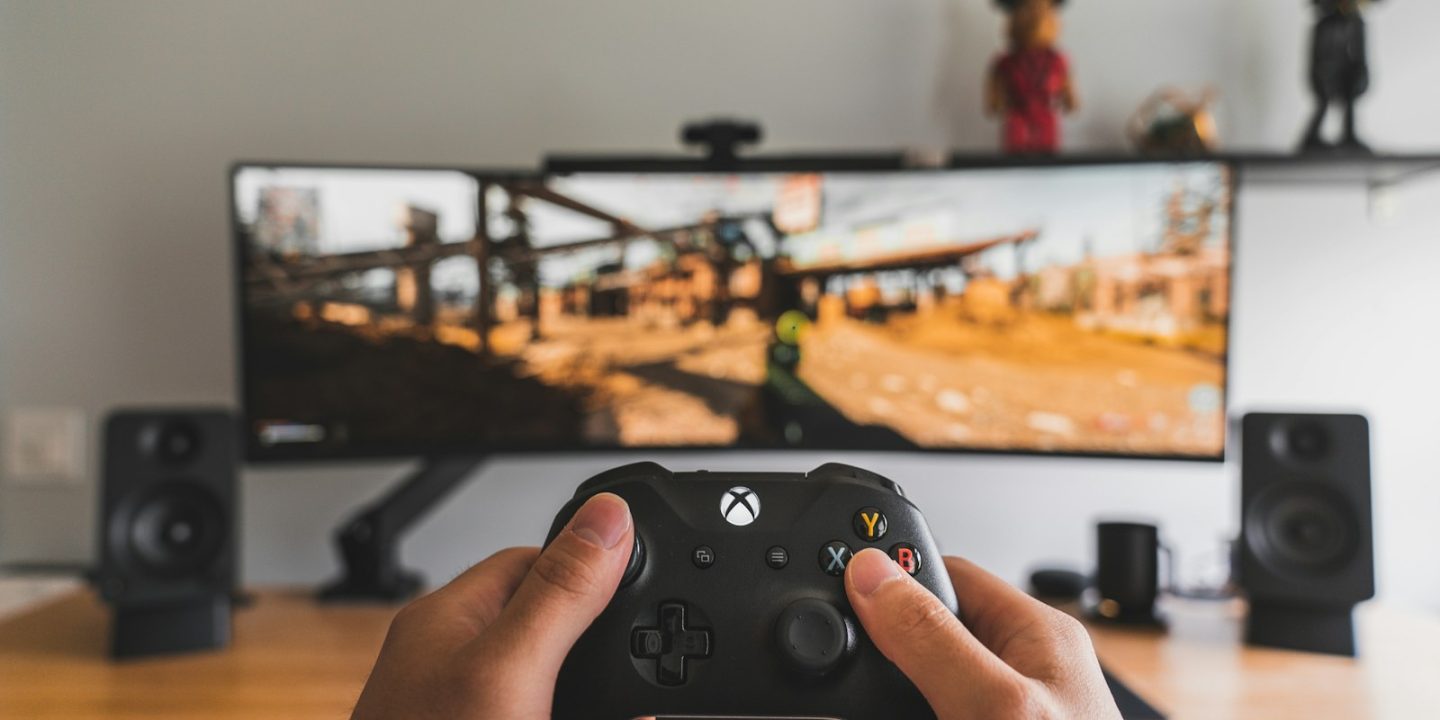
A great gaming TV needs more than a sharp picture. You want HDMI 2.1 for 4K at 120 Hz or higher, variable refresh rate (VRR) to stop tearing, an automatic game mode (ALLM) and low input lag. In 2026 those features have trickled down from €3,000 OLEDs to Mini-LED sets under €700 – so the question is mainly how much picture quality you want on top.
Our picks are based on reviews and measurements from RTINGS, What Hi-Fi, Tom’s Guide, netzwelt and hifi.de, with European prices checked in October 2026. Consoles themselves got more expensive this year (the PS5 Pro is now €899.99), so it pays to get a TV that shows off what they can do – see our consoles and handhelds guide too.
Our picks at a glance
- Best overallLG OLED evo AI C6
- Brightest OLEDSamsung S95H QD-OLED
- Best value OLEDLG OLED B6
- Best AmbilightPhilips OLED911 (2026)
- Best under €1,000TCL C7L (SQD Mini-LED)
- Best value 144 HzHisense U7DSE (Mini-LED)
- Best for bright roomsTCL Q7D Pro (SQD Mini-LED)
Prices are approximate and change often. Ad
1. LG OLED C6 — best gaming TV overall
LG’s C-series has been the default gaming TV for years, and the C6 keeps that crown: What Hi-Fi calls it the best mid-range TV and highlights class-leading gaming features. All four HDMI ports are HDMI 2.1 with VRR, ALLM and both G-Sync and FreeSync support, so you can connect a PS5, an Xbox and a PC without juggling inputs. OLED’s per-pixel lighting means perfect blacks and instant response.
It also comes in 42 and 48 inches, which makes it a popular choice as a big desk monitor for PC gaming. The speakers are quiet and the AI picture modes are best switched off. The 65-inch was around €1,590 in October 2026.
LG OLED evo AI C6
The best all-rounder for most homes: brighter and richer than last year's C5, with class-leading gaming features and much better built-in sound.
Pros
- Excellent picture quality for the price
- Four full HDMI 2.1 ports — ideal for consoles and PCs
- Strong value: heise's average of three tests is 92/100
Cons
- Speakers are on the quiet side
- AI picture modes are best switched off
- Design barely changed from last year
2. Samsung S95H — best for bright rooms and high frame rates
RTINGS calls the S95H the best TV currently available, and it’s a superb gaming screen: a matte QD-OLED panel that handles reflections well, 165 Hz support, four HDMI 2.1 ports and input lag below 10 ms. HDR is very bright for an OLED.
It lacks Dolby Vision (including Dolby Vision gaming on Xbox) and DTS, and its list price is very high – only buy it at deal prices, which have been around €2,430–2,700 for 65 inches.
Samsung S95H QD-OLED
RTINGS' top-rated TV: very bright HDR, deep blacks and a matte screen that tames reflections — but only worth it at deal prices.
Pros
- Very bright HDR with strong blacks
- Matte coating handles reflections well
- Superb for PC and console gaming
Cons
- No Dolby Vision or DTS
- Weak built-in speakers
- Slight black lift in bright rooms; very high RRP
3. LG OLED B6 — best value OLED for gaming
The B6 gives you most of the C6’s gaming benefits for less: OLED contrast and reviewers praise its gaming performance. Tom’s Guide rates it its best overall TV thanks to its value. It’s dimmer than the C6, so better for a darker room. The 55-inch was €999 at MediaMarkt in October 2026.
LG OLED B6
Tom's Guide's best overall pick: accurate colour, good gaming features and OLED contrast at a price that is now close to premium LCD.
Pros
- OLED picture for around €1,000 in 55"
- Accurate colour out of the box
- Good gaming feature set
Cons
- Weak speakers
- Flimsy stand
4. Philips OLED911 — best for immersion (Ambilight)
Philips’ 2026 flagship OLED adds something no other gaming TV has: four-sided Ambilight, which extends the on-screen colours onto your wall and makes games feel bigger. It runs at up to 165 Hz and uses a new tandem OLED panel. An EU price had not been confirmed at the time of writing; check current offers.
Its predecessor only had two HDMI 2.1 ports out of four, so check the port specification before buying if you connect several consoles.
Philips OLED911 (2026)
Philips' 2026 flagship: four-sided Ambilight, a new tandem OLED panel and Bowers & Wilkins sound. The pick if you want the Ambilight experience at its best.
- Panel
- Primary RGB Tandem OLED 2.0
- Peak brightness
- Up to 4,500 nits (claimed)
- Refresh rate
- 165 Hz
- HDMI
- 4× HDMI 2.1
- Audio
- Bowers & Wilkins, 81 W
- Extras
- 4-sided Ambilight · TitanOS
Pros
- Four-sided Ambilight is unique to Philips
- Bowers & Wilkins-tuned audio
- Very high claimed brightness
Cons
- Price and stock still settling at time of writing
- Fewer independent reviews than LG or Samsung so far
5. TCL C7L — best Mini-LED gaming TV under €1,000
The TCL C7L supports 4K at 144 Hz with every gaming feature, and its 2,500+ nit Mini-LED backlight makes HDR games look spectacular. Netzwelt crowned it the best TV under €1,000, and hifi.de scored it 9.0. Only two of its HDMI ports are full-spec 2.1. The 55-inch was €799 in October 2026.
TCL C7L (SQD Mini-LED)
Netzwelt's test winner among TVs under €1,000 and hifi.de scored it 9.0: very bright Mini-LED HDR, full 4K/144 Hz gaming and good sound.
- Panel
- Super Quantum Dot Mini-LED
- Peak brightness
- 2,500+ nits (hifi.de)
- Refresh rate
- Up to 144 Hz in 4K
- HDMI 2.1
- 2 full-spec ports (of 4)
- Smart TV
- Google TV
Pros
- Excellent picture and very high HDR brightness
- 4K/144 Hz gaming with all features
- Good sound for a TV
Cons
- Only two full HDMI 2.1 ports
- No USB recording
6. Hisense U7DSE — best budget gaming TV
For around €630 at 55 inches, the Hisense U7DSE gives you 144 Hz (and up to 288 Hz at 1080p from a PC), VRR and ALLM – features that cost twice as much a few years ago. Netzwelt praised its bright picture and fast interface. Viewing angles are narrow, so it’s best for a sofa straight in front of the screen.
Hisense U7DSE (Mini-LED)
A bright Mini-LED with 144 Hz gaming, VRR and ALLM at a price closer to a basic TV – netzwelt rated it 1.9.
Pros
- Bright, colourful picture
- Fast, easy Vidaa system
- Strong gaming features for the price
Cons
- Narrow viewing angle
- Adverts on the home screen
7. TCL Q7D Pro — Mini-LED alternative
The Q7D Pro matches the C7L’s gaming spec (144 Hz, two HDMI 2.1 ports with VRR/ALLM) and adds very natural colours and excellent brightness for daylight gaming sessions. The 55-inch dropped to €659 in Amazon’s October deals.
TCL Q7D Pro (SQD Mini-LED)
Natural colours, strong brightness for daylight viewing and 144 Hz gaming – netzwelt graded it 1.8.
- Panel
- SQD Mini-LED
- Brightness
- 2,145 nits peak, 1,328 nits sustained (netzwelt)
- Refresh rate
- 144 Hz 4K, 288 Hz at 1080p
- HDMI 2.1
- 2 of 4 ports with 144 Hz/VRR/ALLM
- Smart TV
- Google TV
Pros
- Very good, natural-looking picture
- Handles bright rooms well
- Google TV with every major app
Cons
- Ports are a little tight
- No USB recording
Compare the key specs
| Model | LG OLED evo AI C6Best overall | Samsung S95H QD-OLEDBrightest OLED | LG OLED B6Best value OLED | TCL C7L (SQD Mini-LED)Best under €1,000 | Hisense U7DSE (Mini-LED)Best value 144 Hz | TCL Q7D Pro (SQD Mini-LED)Best for bright rooms |
|---|---|---|---|---|---|---|
| TechHive score | 9.2/10 | 9.0/10 | 8.7/10 | 8.8/10 | 8.3/10 | 8.6/10 |
| Approx. price | €1,590 | €2,430 | €999 | €949 | €630 | €799 |
| Panel | — | — | — | Super Quantum Dot Mini-LED | — | SQD Mini-LED |
| Peak brightness | — | — | — | 2,500+ nits (hifi.de) | — | — |
| Refresh rate | — | — | — | Up to 144 Hz in 4K | — | 144 Hz 4K, 288 Hz at 1080p |
| HDMI 2.1 | — | — | — | 2 full-spec ports (of 4) | — | 2 of 4 ports with 144 Hz/VRR/ALLM |
| Smart TV | — | — | — | Google TV | — | Google TV |
| Brightness | — | — | — | — | — | 2,145 nits peak, 1,328 nits sustained (netzwelt) |
| Shop Ad | Amazon | Amazon | Amazon | Amazon | Amazon | Amazon |
How to choose a gaming TV
HDMI 2.1, 120 Hz and above
PS5, PS5 Pro and Xbox Series X can output up to 120 frames per second; gaming PCs can go higher. You need HDMI 2.1 ports to get 4K at 120 Hz. Count how many full-speed ports a TV has – many Mini-LED sets have only two.
VRR and ALLM
Variable refresh rate syncs the TV to the console’s frame rate to avoid tearing and stutter. ALLM switches the TV into game mode automatically. Both are standard on every TV in this list.
OLED burn-in
Modern OLEDs have several protections against burn-in, but long sessions with static HUDs can still be a risk in the long run. Varying your content and leaving the TV’s pixel-refresh routines enabled helps. If you play the same game for hours every day, a Mini-LED avoids the issue entirely.
Room and size
OLEDs excel in dim rooms; Mini-LEDs shine in bright ones. For desk use, a 42- or 48-inch OLED works as a monitor – otherwise see our best gaming monitors.
EU buying tips
You get a two-year legal guarantee on any TV bought in the EU, and 14 days to return online orders. Check whether burn-in is covered by any manufacturer warranty – terms differ by brand and country.
How we choose
We don’t test TVs in our own lab. We compare measurements and verdicts from RTINGS, What Hi-Fi, Tom’s Guide, netzwelt and hifi.de, check European prices and list the drawbacks honestly. More on how we research.
FAQ
What’s the best TV for PS5 Pro?
The LG OLED C6 is the safest choice thanks to four HDMI 2.1 ports and excellent game features. On a tighter budget, the TCL C7L or Hisense U7DSE support 4K at 120 Hz and beyond for far less.
Do I need 144 Hz or 165 Hz for consoles?
No – consoles top out at 120 Hz. Higher refresh rates only matter for PC gaming.
Is OLED or Mini-LED better for gaming?
OLED has faster response and perfect blacks; Mini-LED is brighter and has no burn-in risk. Both are excellent in 2026.
Does a gaming TV need Dolby Vision?
Only Xbox supports Dolby Vision gaming. PS5 uses HDR10, which every TV here supports.