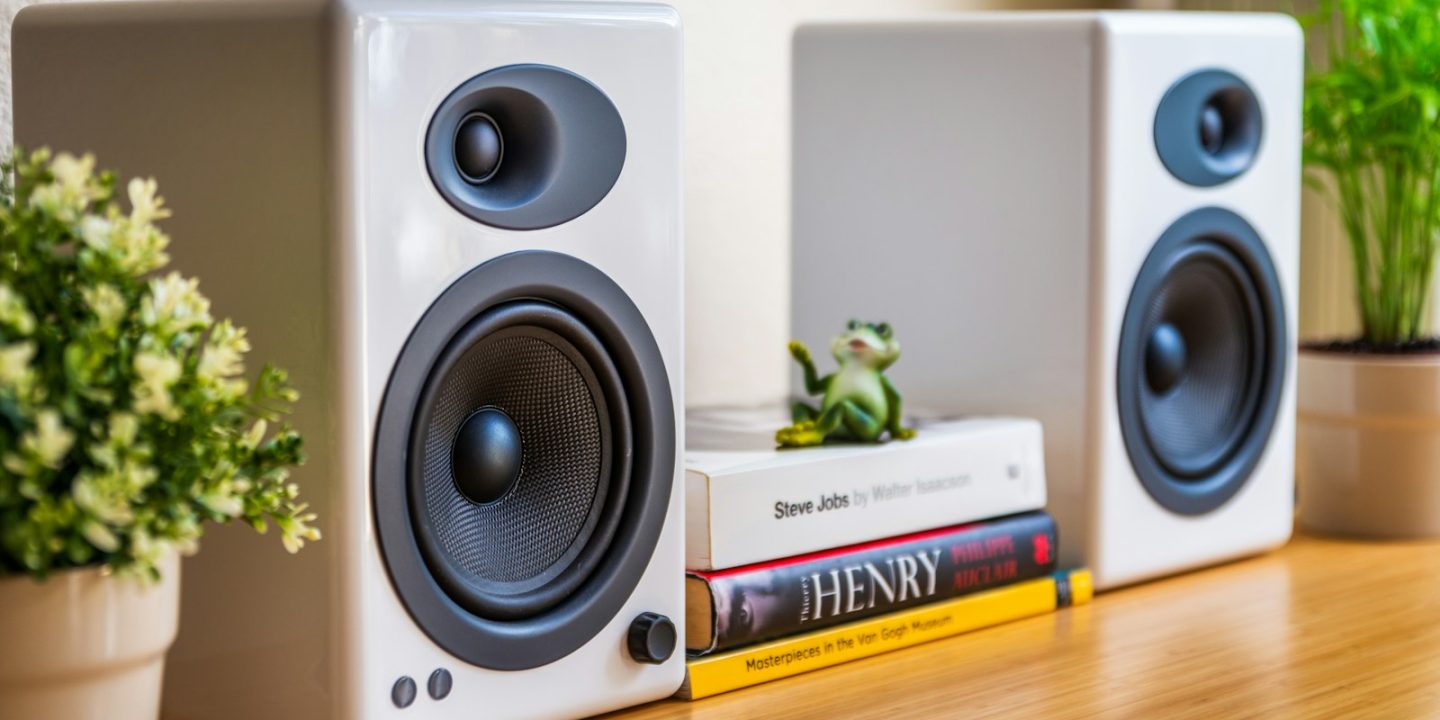
A pair of good bookshelf speakers is the single biggest upgrade you can make to how music sounds at home. They play bigger, clearer and more natural than any smart speaker or soundbar, they last for decades, and they work with everything from a turntable to a TV. The first decision is whether you want passive speakers (which need a separate amplifier) or powered ones (with amplification, Bluetooth and sometimes streaming built in).
Our picks are based on What Hi-Fi’s October 2026 bookshelf speaker awards for passive models and hifi.de’s 2026 active-speaker guides for powered options. Prices are per pair unless noted; many passive speakers are sold through specialist dealers, so where we couldn’t confirm a current EU price we say so.
Our picks at a glance
- Best overallAcoustic Energy AE300 Mk2
- Best budgetDali Kupid
- Best mid-priceDali Sonik 1
- Best for audiophilesPMC Prodigy 1
- Best for large roomsMission 770
- Best powered budgetQ Acoustics M20
- Best wireless streamingKEF LSX II LT
Prices are approximate and change often. Ad
1. Acoustic Energy AE300 Mk2 — best overall
What Hi-Fi’s best bookshelf speaker of 2026 is the updated AE300. Its sound is balanced and unfussy, with good integration between the 29 mm tweeter and 12 cm mid/bass driver and detailed, controlled bass for its size. Build quality is solid at 7 kg per speaker.
It faces strong competition at its price, and the matte finish shows fingerprints. Pair it with a quality stereo amplifier and stands for the best results.
Acoustic Energy AE300 Mk2
What Hi-Fi's best bookshelf speaker of 2026: a balanced, unfussy sound with detailed, controlled bass and solid build.
- Type
- Passive, 2-way
- Drivers
- 29 mm fabric tweeter, 12 cm mid/bass
- Sensitivity
- 86 dB, 6 Ω
- Weight
- 7.0 kg each
Pros
- Balanced, detailed sound
- Controlled bass
- Solid build
Cons
- Matte finish shows fingerprints
- Tough competition at the price
2. Dali Kupid — best budget
Dali’s Kupid is the cheapest way into proper hi-fi from a respected brand: €169 per speaker, or about €338 a pair in 2026. What Hi-Fi names it the best budget bookshelf speaker for its lively, rhythmic presentation, and its compact size, wall-mounting option and five colourful finishes make it easy to fit into a living room.
At 83 dB, it’s not very sensitive, so pair it with an amplifier that has some power in reserve. Bass is limited and the build feels budget next to traditional rivals.
Dali Kupid
What Hi-Fi's best budget bookshelf speaker: lively, rhythmic and compact enough to wall-mount, in five finishes.
- Type
- Passive, 2-way
- Drivers
- 26 mm soft dome, 11.4 cm mid/bass
- Sensitivity
- 83 dB, 4 Ω
- Size
- 23.7 × 14 × 19.5 cm
Pros
- Lively, rhythmic sound
- Compact, flexible placement
- Five colourful finishes
Cons
- Low sensitivity needs a decent amp
- Limited bass
- Budget-feeling build
3. Dali Sonik 1 — best mid-price
The Sonik 1 is What Hi-Fi’s mid-price winner: expressive and detailed, tolerant of placement close to a wall, and finished to a high standard. Some rivals sound punchier, but for long, relaxed listening sessions it’s a superb all-rounder. EU pricing varies by dealer, so check current offers.
Dali Sonik 1
What Hi-Fi's mid-price pick: expressive, detailed and forgiving about placement, with a classy finish.
- Type
- Passive, 2-way
- Drivers
- 29 mm soft dome, 13 cm mid/bass
- Sensitivity
- 86 dB, 6 Ω
- Weight
- 4.1 kg each
Pros
- Expressive, detailed sound
- Tolerant of placement
- Classy build
Cons
- Some rivals sound punchier
4. PMC Prodigy 1 — best for audiophiles
From a British maker known for studio monitors, the Prodigy 1 offers excellent clarity and resolution and a precise, organised sound with surprisingly deep bass for its size, according to What Hi-Fi. It comes only in silk black, and What Hi-Fi felt its perceived value is lower than some rivals.
PMC Prodigy 1
What Hi-Fi's audiophile pick: excellent clarity and resolution with surprisingly deep, punchy bass.
- Type
- Passive, front-ported
- Drivers
- 27 mm tweeter, 13 cm mid/bass
- Sensitivity
- 87.5 dB, 6 Ω
- Weight
- 4.5 kg each
Pros
- Strong clarity and resolution
- Precise, organised sound
- Decent bass depth
Cons
- Lower perceived value
- Only one finish
5. Mission 770 — best for large rooms
The Mission 770 is a modern revival of a 1980s classic. It’s large for a “bookshelf” speaker – 19 kg including its dedicated stands, which are included – but that buys an articulate, insightful sound and impressive bass clarity that fill bigger rooms. Make sure you have the space.
Mission 770
What Hi-Fi's big-room pick: an articulate, insightful revival of a classic with impressive bass clarity and stands in the box.
- Type
- Passive, front-ported
- Drivers
- 28 mm tweeter, 20 cm mid/bass
- Sensitivity
- 88 dB, 8 Ω
- Weight
- 19.2 kg with stand
Pros
- Articulate, insightful sound
- Impressive bass clarity
- Dedicated stands included
Cons
- Big and wide by modern standards
6. Q Acoustics M20 — best powered speakers on a budget
Don’t want a separate amp? The Q Acoustics M20 have amplification built in plus Bluetooth, optical, USB and RCA inputs, so you can connect a TV, a computer and a turntable with a built-in phono stage. hifi.de says they sound very good for the price, around €499–599 a pair.
There’s no Wi-Fi streaming and the two speakers are linked by a cable.
Q Acoustics M20
An all-in-one powered pair with Bluetooth, optical, USB and RCA inputs – hifi.de says it sounds very good for the price.
- Type
- Active (powered)
- Inputs
- Optical, RCA, 3.5 mm, USB
- Wireless
- Bluetooth 5.0
- Weight
- 5.5 kg
Pros
- Very good sound for the price
- Lots of inputs
- Simple to use – no amp needed
Cons
- No Wi-Fi streaming
- Speakers are connected by cable
7. KEF LSX II LT — best wireless streaming speakers
KEF’s compact LSX II LT can replace an entire hi-fi system: 2 × 100 W amplification, AirPlay 2, Chromecast, Spotify Connect, plus HDMI eARC for your TV. hifi.de praises their strong sound that holds up at higher volumes and their easy operation. At €999 a pair they’re not cheap, and there’s no analogue RCA input.
KEF LSX II LT
Compact streaming speakers that can replace a whole hi-fi system: AirPlay 2, Chromecast, HDMI eARC and a confident sound.
- Type
- Active, wireless
- Power
- 2 × 100 W
- Inputs
- HDMI eARC, optical, coax, 3.5 mm, LAN
- Streaming
- AirPlay 2, Chromecast, Spotify Connect
Pros
- Replaces a full hi-fi system
- Easy TV connection via HDMI eARC
- Strong sound at higher volumes
Cons
- No analogue RCA input
- Not Roon Ready
Compare the key specs
| Model | Acoustic Energy AE300 Mk2Best overall | Dali KupidBest budget | Dali Sonik 1Best mid-price | PMC Prodigy 1Best for audiophiles | Mission 770Best for large rooms | Q Acoustics M20Best powered budget | KEF LSX II LTBest wireless streaming |
|---|---|---|---|---|---|---|---|
| TechHive score | 9.0/10 | 8.5/10 | 8.8/10 | 8.7/10 | 8.7/10 | 8.4/10 | 8.8/10 |
| Approx. price | Varies | €338 | Varies | Varies | Varies | €499 | €999 |
| Type | Passive, 2-way | Passive, 2-way | Passive, 2-way | Passive, front-ported | Passive, front-ported | Active (powered) | Active, wireless |
| Drivers | 29 mm fabric tweeter, 12 cm mid/bass | 26 mm soft dome, 11.4 cm mid/bass | 29 mm soft dome, 13 cm mid/bass | 27 mm tweeter, 13 cm mid/bass | 28 mm tweeter, 20 cm mid/bass | — | — |
| Sensitivity | 86 dB, 6 Ω | 83 dB, 4 Ω | 86 dB, 6 Ω | 87.5 dB, 6 Ω | 88 dB, 8 Ω | — | — |
| Weight | 7.0 kg each | — | 4.1 kg each | 4.5 kg each | 19.2 kg with stand | 5.5 kg | — |
| Size | — | 23.7 × 14 × 19.5 cm | — | — | — | — | — |
| Inputs | — | — | — | — | — | Optical, RCA, 3.5 mm, USB | HDMI eARC, optical, coax, 3.5 mm, LAN |
| Wireless | — | — | — | — | — | Bluetooth 5.0 | — |
| Power | — | — | — | — | — | — | 2 × 100 W |
| Streaming | — | — | — | — | — | — | AirPlay 2, Chromecast, Spotify Connect |
| Shop Ad | Amazon | Amazon | Amazon | Amazon | Amazon | Amazon | Amazon |
How to choose bookshelf speakers
Passive or powered?
Passive speakers need a stereo amplifier, but you can upgrade each part separately and they often sound better per euro. Powered speakers are simpler and tidier – ideal next to a TV, desk or turntable. Streaming models like the KEF add Wi-Fi so you don’t need any other box.
Match the amplifier
Low-sensitivity speakers such as the Dali Kupid (83 dB) need more amplifier power to reach the same volume as an 88 dB speaker like the Mission 770. Check impedance too: 4-ohm speakers demand more from cheaper amplifiers.
Placement
Put speakers on stands or a solid surface at ear height, slightly angled towards you, and try them a little away from the wall. Rear-ported designs need more space behind them; front-ported ones are easier near walls.
Room size
Small bookshelf speakers suit rooms up to around 20–25 m². For bigger rooms, choose larger models like the Mission 770 or add a subwoofer.
Buying in Europe
Many hi-fi dealers let you listen before buying – worth it with speakers. Online purchases can usually be returned within 14 days in the EU, and you get a minimum two-year legal guarantee. Remember that many prices are quoted per speaker, not per pair.
For a recording setup rather than listening, see our best studio monitors.
How we choose
We haven’t listened to these speakers ourselves. Our picks rely on What Hi-Fi’s 2026 awards and hifi.de’s active-speaker guides, combined with European prices, and we list each model’s weaknesses. Read more about how we research.
FAQ
Do bookshelf speakers need an amplifier?
Passive ones do; powered models like the Q Acoustics M20 and KEF LSX II LT have amplifiers built in.
Can I connect bookshelf speakers to my TV?
Yes – easiest with powered speakers that have HDMI ARC/eARC or optical inputs, such as the KEF LSX II LT, or via an amplifier with HDMI ARC.
Are bookshelf speakers better than a soundbar?
For music, usually yes: stereo speakers create a wider, more natural soundstage. For films with surround effects, a soundbar may be more convenient.
Do I need speaker stands?
Stands or a solid, decoupled surface at ear height make a clear difference to bass and imaging. The Mission 770 includes its own.